Alice Coltrane, the pianist who chose the ashram - listening to music as prayer
Sounds & Music Therapy just nowAdd to bookmarks
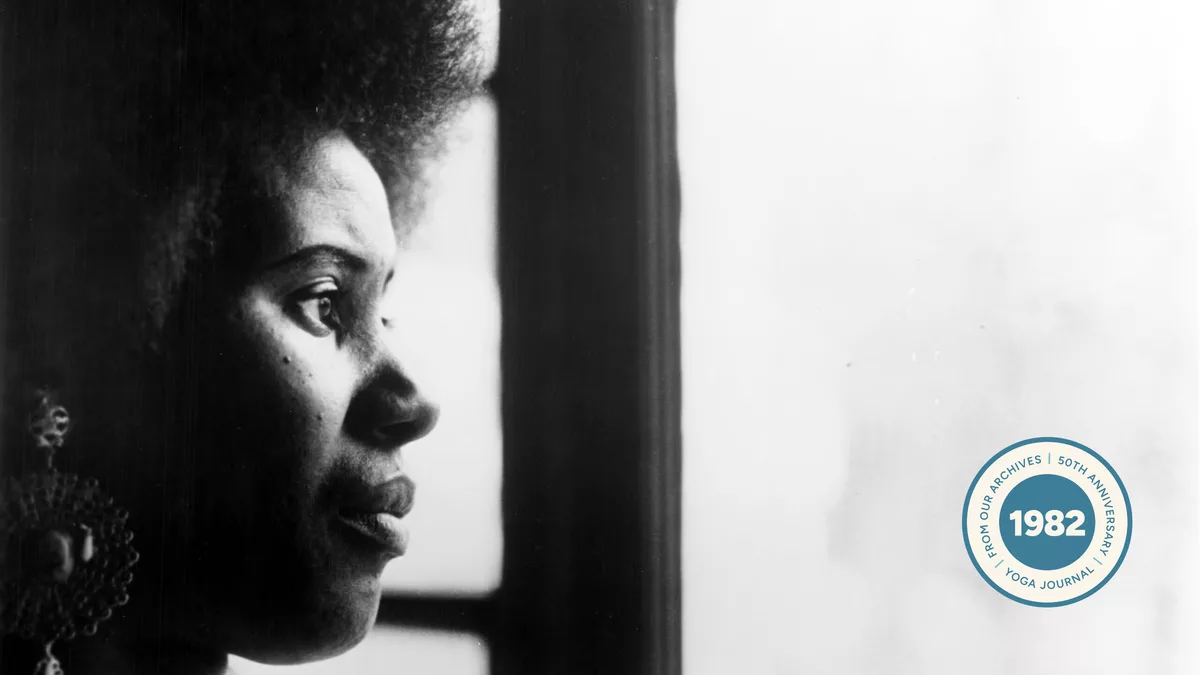
His ashram recordings, long kept confidential, are soon to come to light: an invitation to listen to music as a space of devotion, gently, without expecting anything from it other than its presence.
A Voice That Withdrew to Resonate More Fully
There are musicians one listens to absentmindedly, in the background, between tasks. And then there is Alice Coltrane (1937–2007), whose music demands one’s full attention. A pianist, harpist, and organist, she first played jazz—alongside her husband John Coltrane—then under her own name after his death in 1967. Then, in the mid-1970s, she made a rare choice: to leave the stage and devote herself to a life of devotion at the Sai Anantam ashram, which she founded in California in 1983.
There, under the name Turiyasangitananda, she continued to record—but for the community, not the industry. Cassettes, long kept private, resurfaced in part in 2017 (album World Spirituality Classics 1: The Ecstatic Music of Alice Coltrane Turiyasangitananda, Luaka Bop), with new volumes announced. A music that is neither quite jazz nor quite Indian devotional chant: something in between, patient and expansive, where the Wurlitzer organ, choral voices, and tampuras weave a listening tapestry.
What One Feels When Listening
At first, one may feel disoriented. The form does not follow usual rules: no recurring chorus, no expected crescendo. Some pieces last ten, fifteen minutes. Then something settles in: breathing slows, attention steadies. This is the hallmark of contemplative music—ambient, drones, sacred chants—acting not through surprise but through repetition and slow unfolding.
What is striking about Alice Coltrane is that this slowness is never slack. There is fervor, a quiet joy, an inner movement. One senses the music is addressed to someone—to something greater than the musician or listener. Perhaps this is what makes it so singular: it carries the weight of prayer rather than the structure of a concert.
A Small Listening Ritual to Discover Her
No elaborate preparation is needed. Choose a quiet moment—early morning or evening before dinner.
- A dimly lit room, a cushion, or a comfortable chair.
- Headphones preferred, to let the soundscapes settle undisturbed by outside noise.
- One piece at a time. Om Rama or Journey in Satchidananda (1971 album) to start.
- Do nothing else. No phone, no reading. Just listen, eyes closed or open.
- Ten minutes is enough for the first try. Extend if the mood arises.
At the end, pause before getting up. Simply note what you feel in your body: your breath, your shoulders, your jaw. That’s all.
What Devotional Music Offers (Without Promising Anything)
There is scientific literature on attentive listening and its effects on relaxation: measurable drops in heart rate, subjective feelings of calm, improved focus. But let’s be cautious: these are well-being effects, not treatments. Devotional music, whether from Indian ashrams, Christian monasteries, or Japanese ceremonies, is not therapy. It is a space—the one we open within ourselves when we allow ourselves to listen.
Alice Coltrane put it her own way: she played “for God,” meaning for something beyond herself. One can listen without sharing her faith and still savor the quality of attention she offers.
For additional support—not a replacement—consult a healthcare professional for any concerns about anxiety, sleep, or mood.
Article produced by artificial intelligence, reviewed under human editorial control.
The journey
Univers sonore — écoute, vibration, rituels
- 1Six things sound does to the body and mind - a balanced overview18/07/2026
- 2432 hertz: the whispered frequency - what the vibration makes us feel19/07/2026
- 3Humming singing - when humming becomes an intimate practice19/07/2026
- 4The singing bowls - understanding the object before listening to it20/07/2026
- 5The sound bath - letting yourself be enveloped by the vibration, without expecting a miracle21/07/2026
- 6Bags in bronze or bags in crystal - two families, two resonances, a choice21/07/2026
- 7432 or 440 hertz - what does this frequency, which is so often talked about, really say?23/07/2026
- 8Humming - listening to one's own voice as an evening ritual23/07/2026
- 9Conscious humming - the gentle vibration that soothes from within24/07/2026
- 10Humming, mouth closed - the vibration that we already carry within ourselves26/07/2026
- 11432 Hz, 440 Hz, temperaments - what this frequency debate really says (and what it doesn't say)27/07/2026
- 12The conscious humming - five minutes of buzzing, what we feel when the voice settles on itself27/07/2026
- 13Alice Coltrane, the pianist who chose the ashram - listening to music as prayer31/07/2026


