Meditate without incense or cushion - why the entry threshold is lower than we think
Breath & Meditation 7 h agoAdd to bookmarks
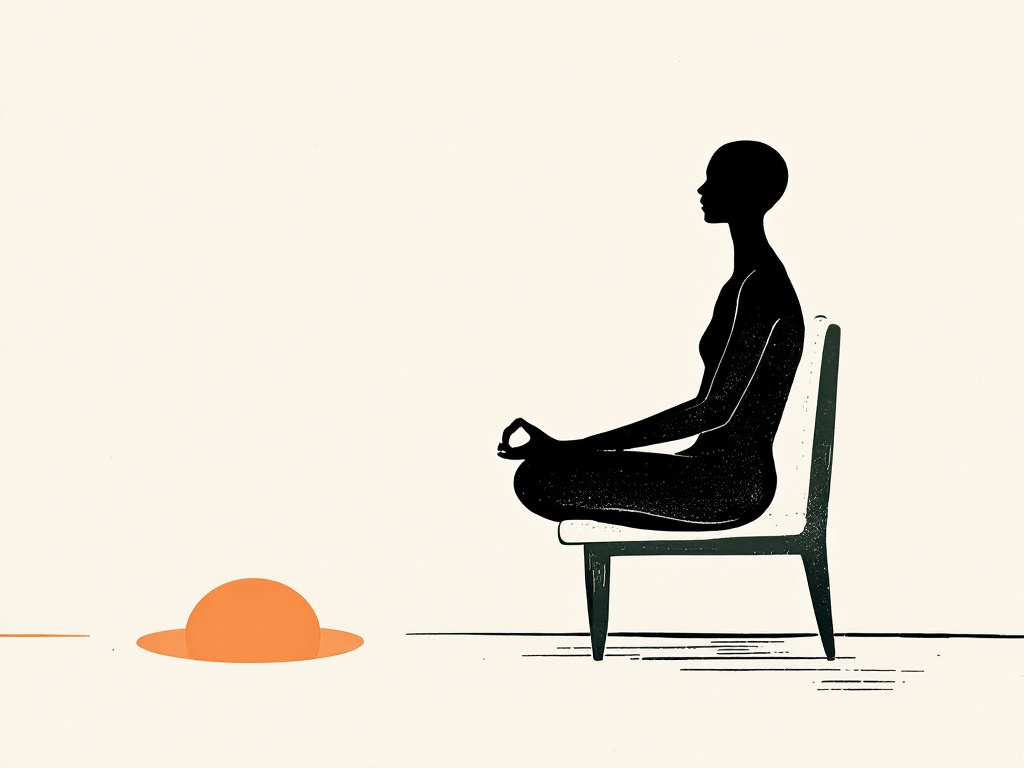
There's no outfit to buy, no decor to install, no mood to wait for. Ten minutes, a chair, a breath: beginner meditation starts here, and the science is rather encouraging.
The invisible obstacle: the imagination
Many people who "can't meditate" have, in reality, never tried. They have imagined - a temple, a mat, a mala, a perfect posture - and the gap between this scene and their living room seemed insurmountable.
It's a shame. Because the practice, on the other hand, doesn't require any of that.
What you really need
- A chair, a sofa, the edge of a bed. Nothing specific.
- Ten minutes. A discreet timer, out of sight.
- Clothes you're already wearing.
- A relatively quiet place - street noises are not enemies.
No incense, no candles, no music. These elements can join the practice later if you like them; they don't found it.
Step-by-step
- Sit down. Feet flat on the floor, back reasonably straight - without stiffness. Hands resting on the thighs.
- Gently close your eyes or let your gaze blur towards the floor.
- Notice the breath. Feel the air at the entrance of the nostrils, or the slight rise of the belly. Choose ONE anchor point and stay with it.
- Count, if it helps. One on the inhalation, two on the exhalation, up to ten. Then start again.
- When the mind wanders - and it will - mentally note "thought", return to the breath. Without blame.
- Finish. Open your eyes, breathe deeply once, get up calmly.
That's all. It's not more complicated. The difficulty is not in the gesture: it is in the patient return, again and again, to this anchor point.
What science observes
Mindfulness meditation is today one of the most studied contemplative practices. The literature - notably several recent reviews in clinical psychology - describes in regular practitioners:
- a moderate improvement in stress management,
- an average reduction in subjective anxiety,
- a slight effect on sleep quality and sustained attention.
Effect sizes vary, protocols are not homogeneous, and "regular practitioner" generally means eight weeks at several weekly sessions. It's not a magic wand - but a mental training, whose effects resemble those observed for a gentle physical training.
What meditation is not
- It's not "emptying the mind": thoughts continue, you just learn not to follow them everywhere.
- It's not a replacement for psychological follow-up or medical treatment.
- It's not a religion or a dogma: the practice can be entirely secular.
A small roadmap for ten days
- Days 1 to 3: 5 minutes.
- Days 4 to 7: 10 minutes.
- Days 8 to 10: 15 minutes.
Always at the same time, if possible: right after coffee, or right before bedtime. Regularity weighs more than duration.
On anxiety, sleep, pain: meditation comes as a complement, never as a replacement - consult a health professional if the need is present.
Article produced by artificial intelligence, reviewed under human editorial control.