Twelve minutes of yin yoga to unwind the day
Breath & Meditation 19 h agoAdd to bookmarks
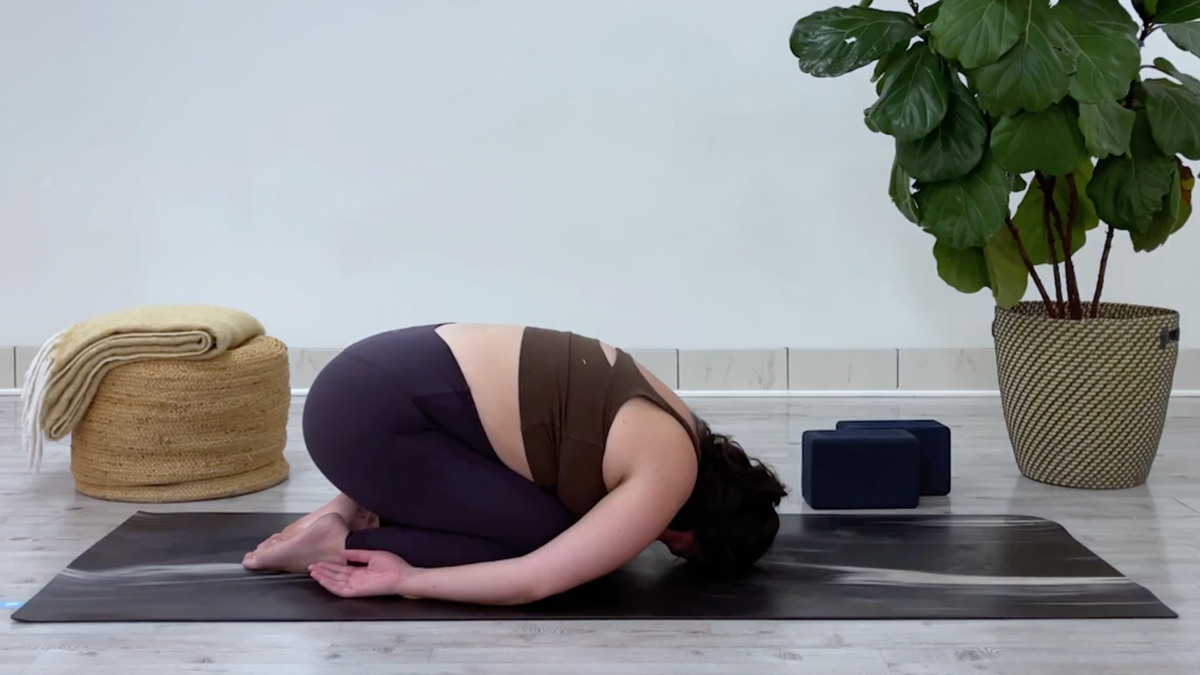
Yin yoga holds poses for a long time, without forcing, in letting go and breathing. Here is a short sequence of four poses to practice in the evening before sleeping, to loosen the knot of the day a bit.
Yin yoga: the posture that waits
Unlike dynamic yoga (often called yang), which chains movements and engages muscles, yin yoga holds each posture for a long time - three to five minutes, sometimes more - in a voluntary muscular relaxation. We do not seek performance; we let the body settle, we observe what comes, we breathe.
The principle: reach the deep tissues (fasciae, tendons, connective tissues) that rapid movement does not reach. Without miracles, this slow work, associated with a prolonged breath, helps many practitioners to feel the muscle tension decrease and the mind calm down. A gentle path, which requires patience.
Before you start
- The moment: in the evening, one hour before bedtime, in a quiet and warm room. Dim lighting.
- The equipment: a mat, one or two firm cushions (or a folded blanket), optionally a bolster.
- The correct posture: seek bearable discomfort, never pain. If it burns, get out. This is not an endurance test.
- The breath: slow, through the nose, without forcing. Let the expiration lengthen gradually.
The sequence, step by step
1. Seated Butterfly (Butterfly) - 3 minutes
Sitting, soles of the feet together, knees falling to the sides. Tilt the torso forward, rounded back, without trying to touch the feet. Let the head hang. Breathe. What you release: lower back, inner thighs, neck.
2. Sphinx (Sphinx pose) - 3 minutes
Lying on your stomach, forearms parallel to the ground, elbows under the shoulders. The torso lifts gently. Shoulders low, away from the ears. Forehead relaxed, jaws released. What you open: solar plexus, front of the body, often contracted by screen hours.
3. Reclined Twist (Reclined twist) - 3 minutes on each side
Lying on your back, bring the right knee towards the chest then tilt it to the left side. Right arm stretched horizontally, gaze towards the right hand. Two or three deep breaths, then completely relax in the posture. Change sides. What you release: spine, hips, breathing.
4. Savasana - 2 minutes (at least)
Lying on your back, arms slightly apart from the body, palms facing the sky, legs falling naturally outward. Close your eyes. Let the weight of the body sink into the ground. Nothing to do. Nothing to succeed.
What you can hope for
This small routine, practiced a few evenings in a row, helps many people to better prepare for sleep, to feel the muscle tension decrease, to slow down the mind. It is a transition ritual between day and night.
Important reminder
Yoga, whatever it is, is an art of living, a training for well-being - not a medical treatment. For persistent pain, stress that invades everything, very disturbed sleep or anxiety that cuts you off from daily life, consult a health professional. Yin yoga can be a precious complement to a follow-up, never its replacement.
Article produced by artificial intelligence, reviewed under human editorial control.