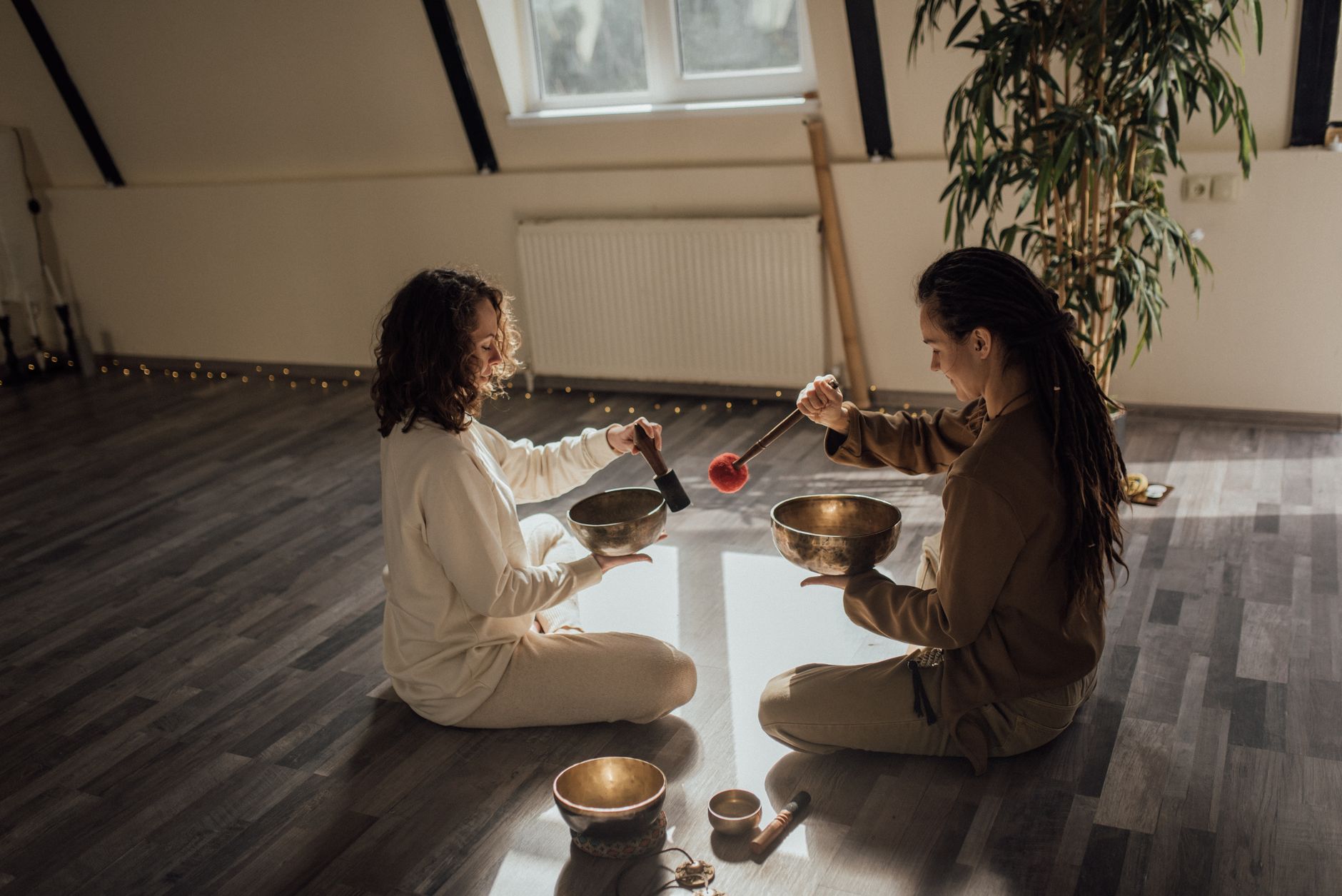
Humming singing - when humming becomes an intimate practice
Sounds & Music Therapy yesterdayAdd to bookmarks

A deep, closed-mouth sound, prolonged for a few moments. Humming - or hummed singing - is perhaps the simplest sound practice there is. An invitation to discover vibration as an inner massage.
The oldest sound in the world
We've all done it without thinking: humming while cooking, walking, rocking a child. That little sound mmm, mouth closed, throat relaxed. It's called humming in English, or more poetically conscious humming when you really stop to do it.
It's perhaps the most universal sound exercise - present in Buddhist traditions (the OM being a codified form), in lullabies from all cultures, in modern therapeutic toning.
What humming does
Unlike singing, which pushes the sound outward, humming keeps the vibration in the body. With the mouth closed, the sound resonates in the cavities of the skull, in the chest, sometimes even in the stomach. It's a strange sensation the first time: you are both the instrument and the listener.
Many report rapid relaxation - shoulders dropping, breath calming, mind stopping its endless loop. Nothing mystical: it's a combination of prolonged breathing, felt vibration, and attention focused on oneself.
A short ritual - five minutes is enough
Here's a simple entry, to try on a gray morning or a busy evening:
- Sit up straight, hands resting on the knees or on the belly.
- Inhale deeply through the nose (about three seconds).
- Exhale while humming a low and steady sound - a long, soft mmm, without forcing. Feel where it vibrates: the lips, the nose, the chest.
- Repeat five to ten cycles. Let the sound find its natural pitch, the one that doesn't tire.
- Silence at the end. Listen to the return of calm in the body.
You can close your eyes, or focus on a stationary point - a fold in the curtain, a candle flame. Humming loves the simplicity of attention.
A practice, not a remedy
Humming relaxes, soothes, helps to return to oneself. It's a well-being practice: it accompanies rest, it doesn't replace it. If you're going through a period of persistent anxiety, sleep disturbances, or lasting tensions, in addition, not as a replacement - consult a healthcare professional.
What the practice gives, it gives gently, without promise. Perhaps that's all its beauty: it asks for nothing, it offers the time to listen to oneself.
Article produced by artificial intelligence, reviewed under human editorial control.
The journey
Univers sonore — écoute, vibration, rituels
- 1Six things sound does to the body and mind - a balanced overview18/07/2026
- 2432 hertz: the whispered frequency - what the vibration makes us feel19/07/2026
- 3Humming singing - when humming becomes an intimate practice19/07/2026
- 4The singing bowls - understanding the object before listening to it20/07/2026