Anchoring when the mind spins - a short ritual to return to the ground
Breath & Meditation 14 min agoAdd to bookmarks
When the day gets hectic and the mind races, there is a very simple practice that helps to return to the body: a five-minute guided grounding exercise, to be done sitting down, with eyes half-closed.
Why to anchor
Many meditations are done with eyes closed. There are others, even simpler, that use a soft gaze - slightly open eyelids, gaze resting without intention, a bit like when you look at a fireplace without staring. This form of expanded attention relaxes facial tensions and leaves room for the outside world: it suits those who find closing the eyes uncomfortable, or who feel dizzy when the mind is too agitated.
This practice is called soft-gaze meditation in the contemporary tradition of mindfulness - a soft anchor, without completely closing the door to the outside.
The step-by-step ritual (5 minutes)
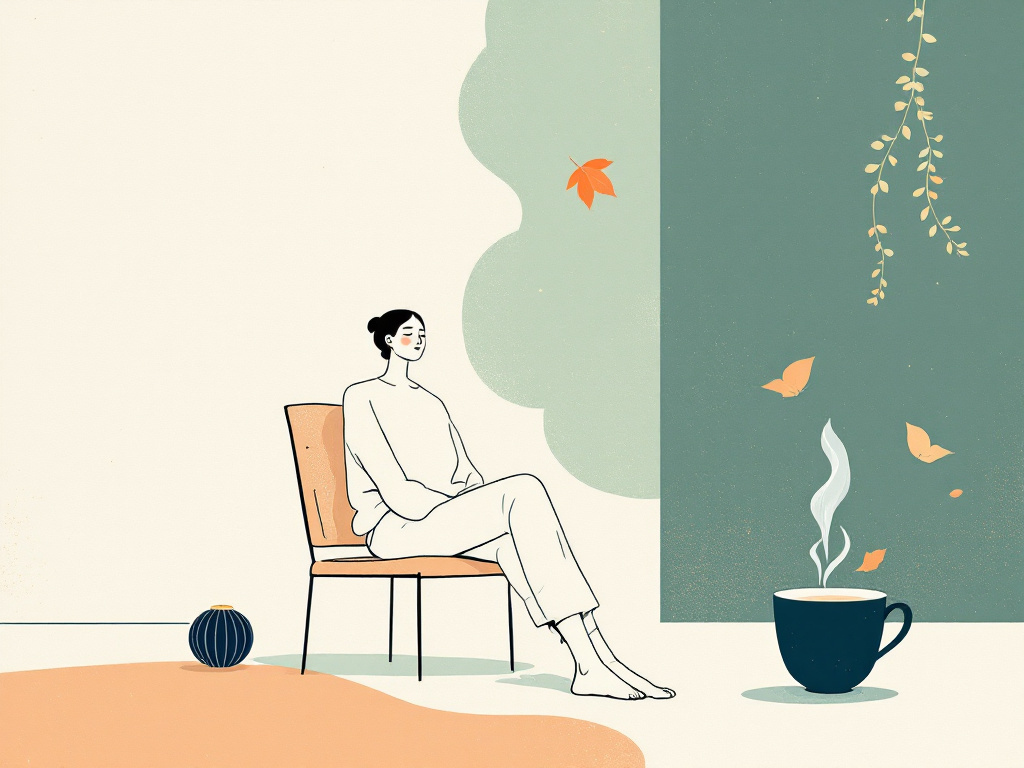
Get settled. Sit on a chair, both feet flat on the floor, or cross-legged on a cushion - the posture doesn't matter as long as the spine remains free and straight. Hands resting on the thighs, palms down.
Place the gaze. Lower the eyelids slightly without closing them. The gaze naturally falls about a meter in front of you, on the floor. You don't fix anything: you let the light in, without trying to discern the details. The face relaxes.
Feel the support points. Take three slow breaths. With each exhalation, feel the feet on the ground - their weight, their temperature, their contact with the shoe or the tile. Also feel the buttocks on the seat, the hands resting on the thighs. That's what anchoring is: reminding the body that it is here.
Expand. Without moving the eyes, try to feel simultaneously: the feet, the weight on the seat, the rhythm of the breath that enters and exits through the nose. Three things at the same time. When a thought arrives - it will arrive - recognize it without judging it, then gently return to the trio feet/seat/breath.
Close. After a few minutes, take a deeper breath, close your eyes for a moment, feel the calm, then open them gently.
When to practice
- In the morning, before starting your day: five minutes that set the tone.
- Between two meetings, at your desk: even through a screen, the gesture brings the body back.
- In the evening, before dinner or just before going to sleep: to mark the break between the day and rest.
What is not expected from the practice
Anchoring is not meant to make thoughts disappear: it is a gentle training to return. Thoughts come back, attention goes away, the body is recalled - that's the whole practice. Regularity counts more than duration: five minutes a day, over several weeks, changes more than an exceptional hour.
Important reminder
Anchoring meditation is a well-being practice, a gentle training of attention. It is not a medical treatment: on a very agitated mind, persistent anxiety or established sleep disorders, it comes as a complement - never as a replacement - to follow-up with a health professional.
Article produced by artificial intelligence, reviewed under human editorial control.
The journey
Souffle au quotidien — respirations, méditations, sommeil
- 1Meditate without incense or cushion - why the entry threshold is lower than we think18/07/2026
- 2Pranayama: this ancient art of breath that science is rediscovering19/07/2026
- 3Viparita Karani - legs up the wall, the simplest recovery pose there is21/07/2026
- 4Walking with awareness - six simple ways to turn a journey into a practice22/07/2026
- 5Anchoring when the mind spins - a short ritual to return to the ground23/07/2026