Create a listening corner at home - a small refuge for bowls and silence
Sounds & Music Therapy 7 h agoAdd to bookmarks
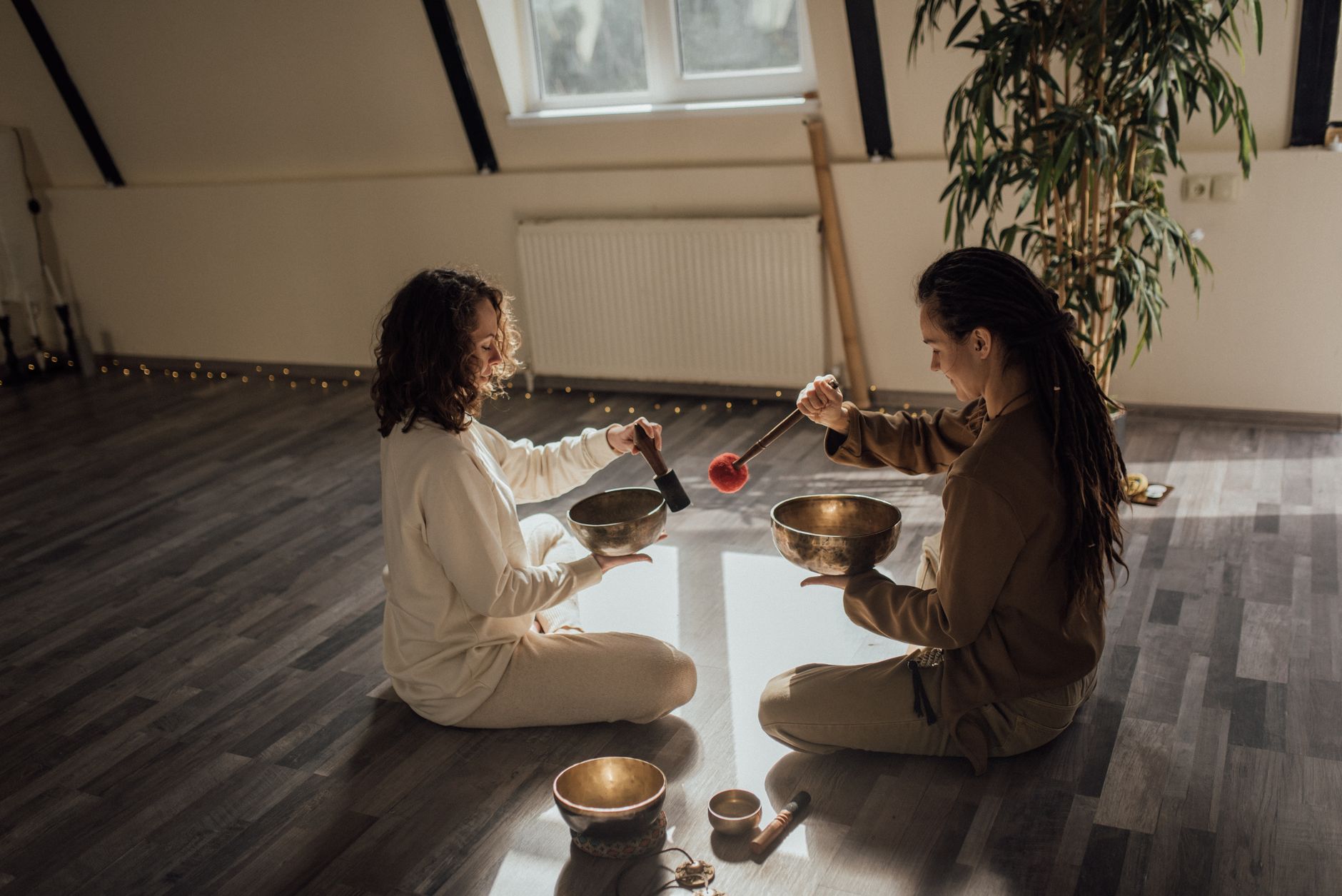
A rug, a cushion, two or three objects, low lighting. What you really need to turn a corner of the house into a sound relaxation space.
A space, before an instrument
One often thinks that one must first buy a bowl, a flute, a carillon. In reality, what changes everything is the place where one listens. A dedicated corner - even tiny - sends a signal to the body: here, we slow down. Regularity comes from there.
There is no need for an entire room. One square meter near a window is enough. The important thing is that it is stable (it is not put away every evening) and free from ambient noise (away from the kitchen, the TV, the phone).
What to install there
- A rug or mat, thick enough to sit for a long time without discomfort.
- A meditation cushion (zafu, or simply a firm cushion). The high seat allows the pelvis to tilt slightly, and the back follows on its own.
- Low light - a lamp with an amber bulb, or a candle made of beeswax (discreet scent, yellow flame, softer than paraffin).
- An object that speaks to you: a small branch picked up in the forest, a smooth stone, a feather. Nothing decorative, something that connects you.
- An instrument, if you have one: a singing bowl (metal or crystal), a koshi carillon, a tingsha. Otherwise, a simple listening playlist.
The listening ritual
Sit down. Three slow breaths, eyes half-closed. Then, if you have a bowl: strike it once, with the felt mallet, on the rim (not the bottom). Let the sound rise, then decrease, then disappear completely - until the silence that follows. It is this silence that one listens to, as much as the sound.
Repeat three times, a few minutes apart. The session lasts ten to fifteen minutes. If you don't have a bowl, put on a track of Tibetan bowl or crystal bowl at low volume, lie on your back, one hand on your stomach, and follow the sound as one follows a wave.
Much is said about the « Solfeggio frequencies » (396, 528 Hz…) attributed to a monk from the 11th century. Rigorous studies remain rare: these are frequencies pleasant to listen to, not « healing waves ». Listen to what relaxes you, without seeking a medical effect.
Which instrument to start with?
- The Tibetan singing bowl in metal: warm, rich in harmonics, tolerant of clumsiness. A good first choice (60-120 € for a correct bowl).
- The crystal bowl: more airy, almost pure sound. More fragile, more expensive, but very enveloping.
- The koshi carillon or the tingsha (small Tibetan cymbals): perfect for opening or closing a session. Inexpensive.
Avoid very cheap models under 20 €: the sound is often metallic and tiring.
What to expect from it
Regular practice of a few minutes a day helps to relax the nervous system, slow down breathing, create a reference point in the day. It is not a treatment: it is an art of attention. A way of telling one's body "I am here, I listen to you", through the vibrations of a bowl that decreases, through the silence that follows.
Sound listening accompanies well-being and relaxation - as a complement, not a replacement for medical treatment. For any anxiety disorder, sleep, or medication that affects hearing or mood, consult a health professional.
Article produced by artificial intelligence, reviewed under human editorial control.