Blueberry and marigold meadow - three months of blue and gold at the end of the garden
Nature & Seasons yesterdayAdd to bookmarks
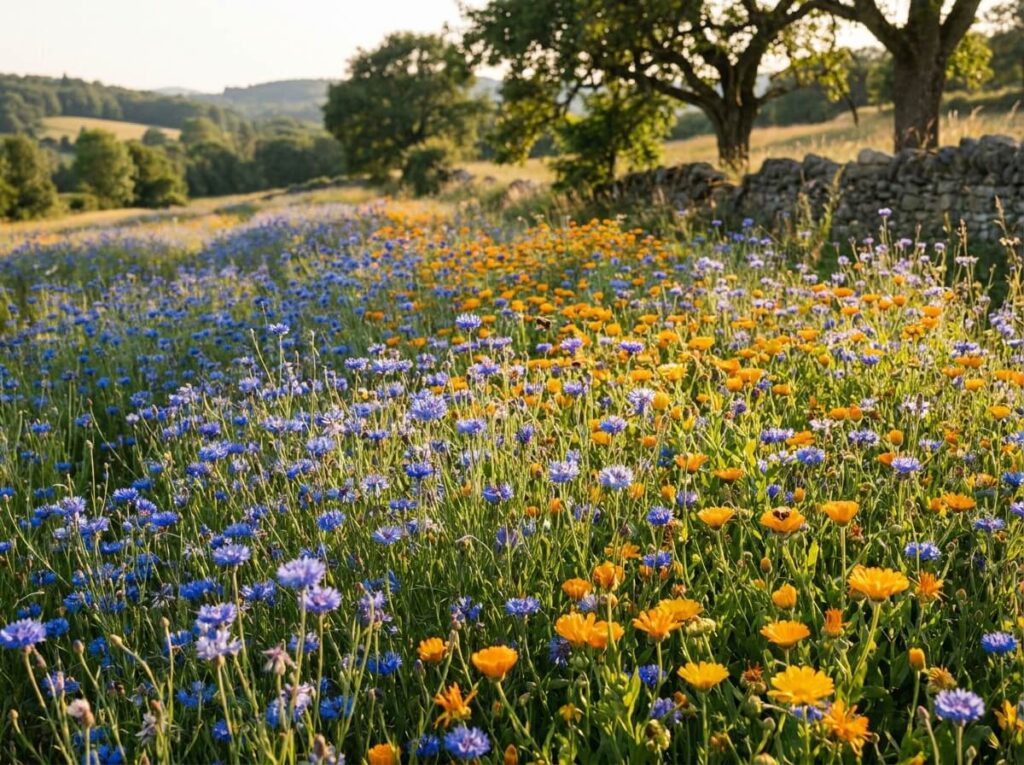
A simple mix of two annual flowers that holds the blue and yellow line from June to September. A square that you sow once, let live, and that brings together the bumblebees.
A meadow that we look at more than we work on
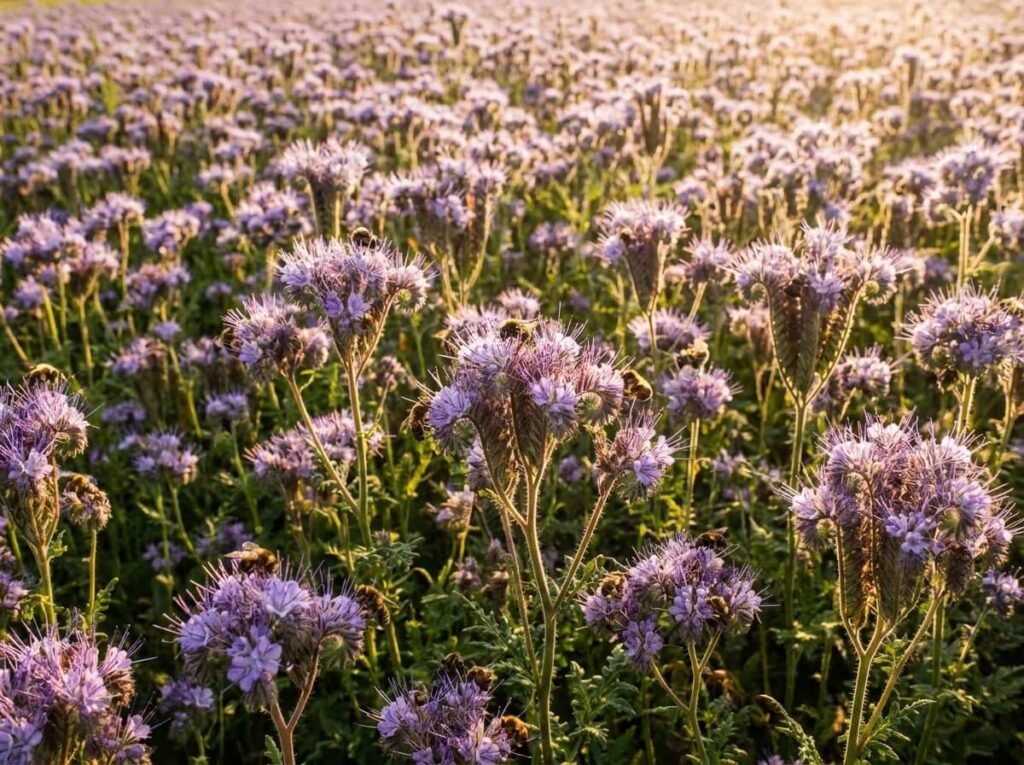
After phacelia, that purple cushion that welcomes bees in the heart of summer, the garden of the seasons lingers this month on another mixture, even more rustic. Only two flowers - the cornflower (Centaurea cyanus) and the pot marigold (Calendula officinalis) - but which, sown together, give three full months of color, almost without intervention.
The cornflower, that old companion of wheat fields, has taken on the color of a memory in recent years. It was once called "barbeau," and it bore the deep blue of faded fabric that now only exists in paint. The marigold, on the other hand, holds a brighter orange, almost electric, frankly solar. The two together trace a blue and gold line in the green of the grasses - a contrast that the eyes never tire of taking up again.
This is the kind of corner that you don't work on. You sow, you look, you listen.
The gesture, once a year
Sowing is done in March-April, as soon as the soil warms up and the risk of night frost recedes. Or at the end of summer, August-September, for early flowering the following year.
What you need:
- A square of full sun (both flowers require a minimum of 6 hours of sun)
- A well-drained soil, even poor - especially poor: too rich soils cause the foliage to grow at the expense of the flowers
- 5 g of cornflower per 1 m², the same for the marigold (i.e., a small packet of each to cover 2-3 m²)
The gesture:
- Lightly scratch the soil to aerate it, remove large clumps of weeds.
- Mix the seeds of the two species by hand in a bowl.
- Sow broadcast, which means throwing the seeds in front of you with a wide arm movement. Nature takes care of the rest: what is to rise will rise, what falls on the stone will feed the birds.
- Pass a very light rake to cover with a few millimeters of earth.
- Water in fine rain if the sky does not do it in the following days.
And then we leave. We come back three weeks later to see if it grows. There is nothing else to do.
What the meadow does to the garden - and to those who look at it
By June, the first flowers appear. The marigold starts faster, it opens the ball in yellow. The cornflower follows, higher on its thin stem, and tilts in the wind. By July, the two meet: the yellow rises to the level of the blue, and the square takes on this double note that no painter has ever really fixed. This lasts until the first cool rains of late September, sometimes October in the south.
All this time, the meadow buzzes. Bumblebees look for pollen at the base of the cornflower flowers, domestic bees prefer the marigolds, more open, easier to forage. There are also hoverflies, these small flies disguised as wasps that do good in the garden by devouring aphids.
And there is us. A bench not far away, a cup of coffee held with both hands, and five minutes that become twenty without us noticing.
What the mixture tells
This encounter between cornflower and marigold is not trivial. The two plants grew together in the old harvests - the cornflower accompanied the wheat, the marigold the market gardens and the village gardens. They were found in the same herbals, the same jars of dried flowers. Sowing these two together today is to reconstruct, without thinking about it, a small fragment of the 19th century countryside. A corner of vegetable memory.
And for a garden that saves water - the two species are frugal, once established they are content with natural rains - it is a gesture that fits well in the summers to come.
At the end of the season, the gesture of the following sowing
When the flowers fade and give their small black seeds, you can:
- Let them fall to the ground: the meadow will reseed itself part of the square next year.
- Harvest them in a paper envelope (never plastic - the damp seeds mold), note the variety and the year, keep them dry for next autumn.
Nothing is lost. Nothing is thrown away. Maybe that's it, after all, the promise of a garden that follows the seasons: one hand full of seeds, and three months of blue and gold to come.
Article produced by artificial intelligence, reviewed under human editorial control.
The journey
Jardin des saisons — nature, bêtes, saisons
- 1The phacelia, that purple cushion that welcomes bees in the heart of summer18/07/2026
- 2Blueberry and marigold meadow - three months of blue and gold at the end of the garden20/07/2026
- 3Edible summer flowers - pick at the right time, serve while they're still alive21/07/2026