Tai Chi and stress - what slowness, really, offers to the body that runs
Asian Arts just nowAdd to bookmarks
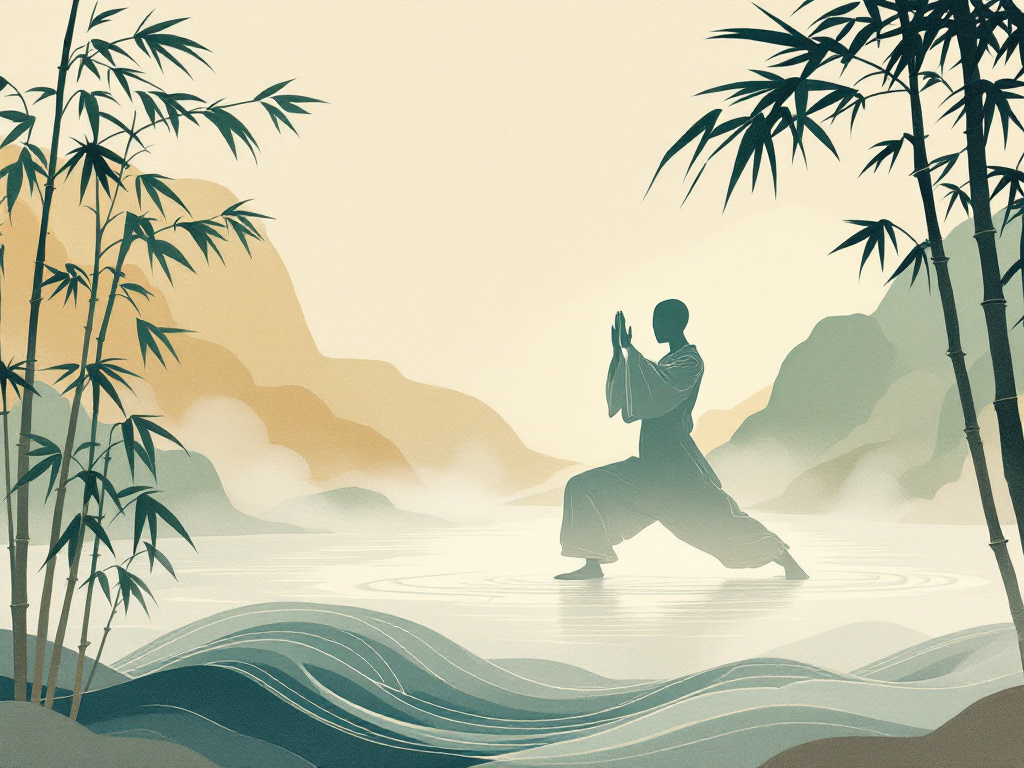
When one seeks to slow down a tense nervous system, one sometimes attacks it head-on - forced breathing, "effective" meditation. Tai Chi offers the opposite: accompanying the movement rather than stopping it, until the speed itself settles.
An Ancient Answer to Modern Tension
Tai Chi Chuan (太极拳, tàijí quán, "the supreme ultimate fist") was born in northern-central China in the 17th century: the Chen lineage emerged in the village of Chenjiagou, in Henan, and then the art branched out into several styles (Yang, Wu, Sun…). A parallel tradition, associated with the Wudang Mountains in Hubei, links Tai Chi to older Taoist practices attributed to the legendary figure of Zhang Sanfeng - the historical question remains debated. Originally an internal martial art, this practice evolved in the 20th century into a culture of health and longevity. What has made its transmission is precisely its very particular way of approaching what is called today "stress".
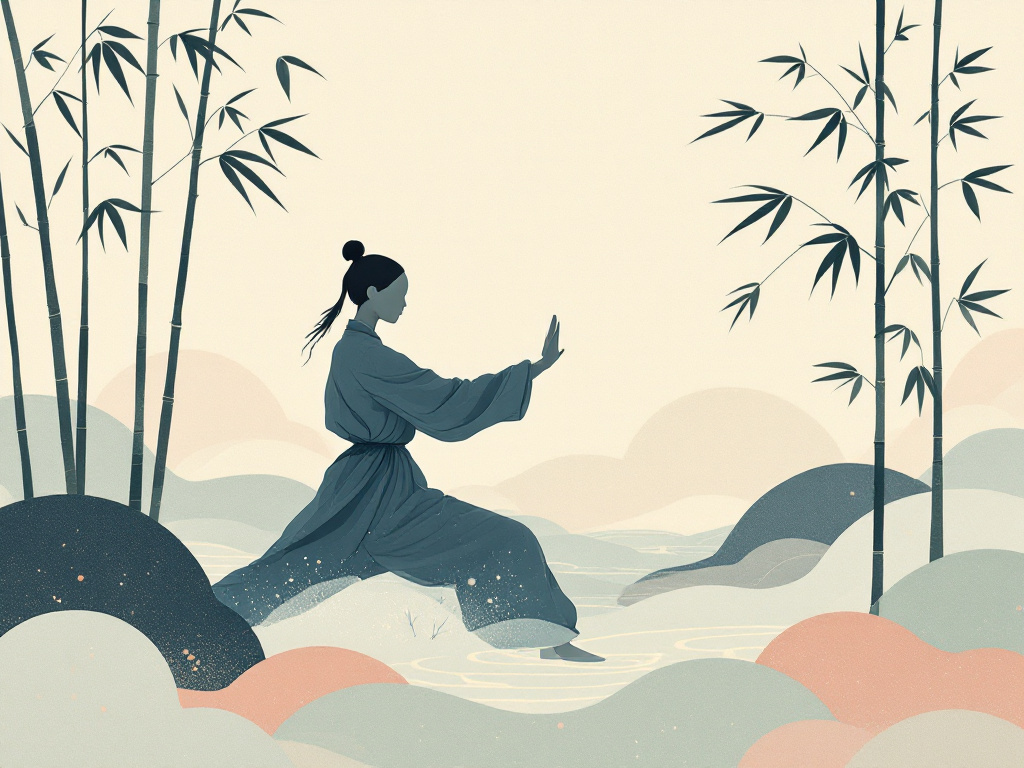
Where most stress management methods seek to cut the agitation (close the eyes, stop, breathe deeply), Tai Chi offers to transform the movement - to accompany the body's start-up with slow, continuous, rooted gestures, until the haste finds its own rhythm on its own.
What Happens, Physiologically
We can describe the effect in simple terms, without overpromising. A Tai Chi session combines three things:
- A soft vertical posture, neither stiff nor slumped, which slightly opens the diaphragm.
- A slow and continuous movement, where the weight passes from one foot to the other without jerks.
- Abdominal breathing, not forced, which matches the movement.
This combination stimulates what physiologists call the parasympathetic tone - the branch of the autonomic nervous system that promotes recovery. Several scientific studies report beneficial effects of Tai Chi on balance in the elderly and on certain markers of perceived well-being. Let's be measured: the studies vary greatly in quality, and Tai Chi is not a treatment. It's a practice of training in presence, which many practitioners report lightens - without, however, curing.
A Short Exercise to Start at Home
Here is a simple entry, without equipment, in five to seven minutes. It does not replace a class or a teacher, but it gives a first glimpse of what slowness does to the body.
- Stand. Standing, feet parallel apart the width of the hips. The knees soft, the shoulders relaxed. Take three abdominal breaths.
- Rock the weight. Slowly transfer your weight to the left foot, then to the right. As slowly as possible. Feel the contact evolve under each sole.
- Open the hands. At belly height, gently spread the hands outward as you inhale. Close them as you exhale. Repeat eight times.
- Walk forward. Take three very slow steps, first placing the heel, then rolling the sole. The gaze soft, far ahead.
- Return. Rest standing, hands in front of the belly, for about thirty seconds. Listen to what has changed.
The Spirit of the Gesture
What distinguishes Tai Chi from a simple gentle gymnastics is the attention paid to the gesture: the awareness of the support, the weight, the breath, the trajectory of the hands. Little by little, this quality of attention overflows from the practice. You feel that you close a door more softly. That you carry a tray differently. That you respond to a message with a little more latency - the right one, the one that leaves time to choose the words.
Many evening practitioners describe the same thing: after a twenty-minute session, the body does not ask to do more - it asks to stay a moment in that rhythm. It's a sign that something has settled.
As a complement, not a replacement - consult a health professional if you are going through a period of prolonged stress or prolonged insomnia.
Article produced by artificial intelligence, reviewed under human editorial control.
The journey
Cheminement taoïste — mouvement et souffle
- 1The Tai Chi Walk - place one foot, listen to its weight18/07/2026
- 2Taoist meditation - tuning into the rhythms already present within oneself20/07/2026
- 3Tai Chi and stress - what slowness really does to the body that spins too fast22/07/2026
- 4Tai Chi and stress - what slowness, really, offers to the body that runs24/07/2026