The four principles of Chadō - wa, kei, sei, jaku, what the way of tea teaches us
Asian ArtsSubscribers only 1 h agoAdd to bookmarks
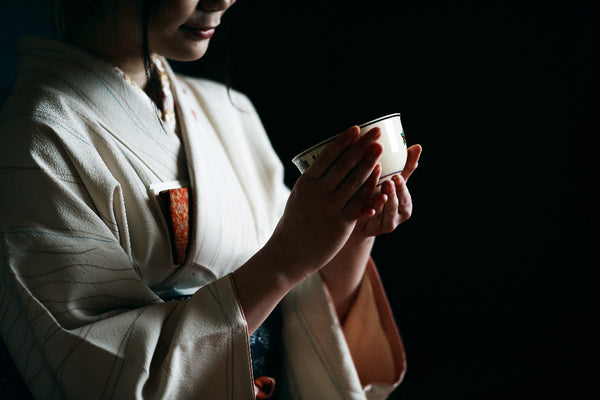
Harmony, respect, purity, tranquility: four words set by master Sen no Rikyū in the 16th century continue to organize the Japanese way of tea - and, if we listen carefully, our own way of being in the world.
Four Ideograms to Hold a Life
The Chadō (茶道, "the way of tea") is not just about preparing and drinking matcha. It is a codified practice, transmitted since the 16th century, where every gesture - from welcoming the guest to putting away the ladle - is an opportunity to exercise a certain quality of presence. Master Sen no Rikyū (1522-1591), who established the most stripped-down form of the ceremony under the style wabi-cha, attached four principles held since as its ethical foundation: 和 wa (harmony), 敬 kei (respect), 清 sei (purity), 寂 jaku (serenity). In Japanese, they are referred to as wakei-seijaku (和敬清寂). Four characters that can be read separately - and lived together.
和 - Wa, Harmony
Wa refers to the agreement between beings and things. In the tea room, this begins very early: the host prepares the space by matching the flowers to the season, the bowl to the day's topic, the light to the moment. Nothing seeks to shine alone. One does not choose the most beautiful bowl; one chooses the one that goes with - with the guest, with the season, with the silence of November or the heat of August.
This harmony is not fusion. Each keeps their place - the host remains host, the guest remains guest, the teapot does not imitate the flower. Wa is this way of adjusting without crushing. At home, one can practice it even before taking out a bowl: looking at the table, removing the extra object, letting two or three things breathe.
敬 - Kei, Respect
The respect that Chadō cultivates is neither ceremonial nor distant: it is a concrete attention. Respecting the bowl means holding it with both hands. Respecting the guest means presenting the decorated side of the bowl to them. Respecting the gestures of the ancients means repeating the same ladle movement until the body knows its measure.
Sen no Rikyū taught that the low entrance door (nijiriguchi) obliged everyone - samurai and peasant alike - to bow to enter. Inside, no ranks. Respect was given horizontally. It is a discreet lesson on what being polite means when the decorum is removed: making room for the other, without hierarchizing them.
清 - Sei, Purity
Sei is cleanliness - but understood as an art. Before the ceremony, the host cleans the garden, wipes the stones of the path (roji), rinses the bowls, folds the cloths. This cleaning is not preparatory: it is already part of the ceremony. One does not clean to be ready - one cleans to make oneself available.
This purity has nothing moral about it. It is closer to the idea of "what no longer clutters." A cloth folded carefully, a teapot wiped inside, a thought set aside before entering: all this belongs to the same gesture. At home, the practice begins with the kitchen counter before making tea - not because one must be flawless, but because the clarity of the space creates the clarity of attention.
寂 - Jaku, Serenity
Jaku is the most difficult to translate. One can hear "calm," "tranquility," but also a deeper nuance, close to the silence of great winter landscapes: a peace that is not the absence of noise, but full presence. It is the fruit of the first three principles. When harmony is adjusted, respect is lived, and purity is set aside, the silence that remains is not empty - it is inhabited.
Many practitioners say that jaku is not something one seeks: it is what comes, almost unknowingly, when one has worked enough on the other three. A bit like when one stops chasing sleep and it arrives.
What the Way of Tea Can Remind Us
One can live without ever holding a chasen (the matcha whisk). But these four words, when left to infuse, color many simple gestures differently: serving someone coffee, preparing a table for two, cleaning before receiving. They remind us that an art of living does not need to be spectacular to be demanding. It is enough that the gesture is made - truly made, to the end - with the idea that the other, the thing, the moment, deserve that one be fully present.
Tradition reports that Rikyū summarized the tea ceremony as little: heat water, prepare tea, correctly. The correctness here is not boring: it is where wakei-seijaku finds its body.
Content reserved for members
Create a free account to access all our content and the weekly review.
Article produced by artificial intelligence, reviewed under human editorial control.
The journey
Japon — art de vivre et gestes saisonniers
- 1Ise-Shima through the Seasons - When Walking Becomes an Inner Pilgrimage18/07/2026
- 2**komorebi, the light that filters through the leaves**19/07/2026
- 3**Uchimizu - The Japanese Art of Sprinkling Water to Cool Down in Summer**21/07/2026
- 4Yamaguchi - the "Kyoto of the West", between estuaries, torii gates and forgotten shrines22/07/2026
- 5The four principles of Chadō - wa, kei, sei, jaku, what the way of tea teaches us24/07/2026