The lupin - the bitter seed turned into an aperitif ritual
Vegetable Cuisine 49 min agoAdd to bookmarks
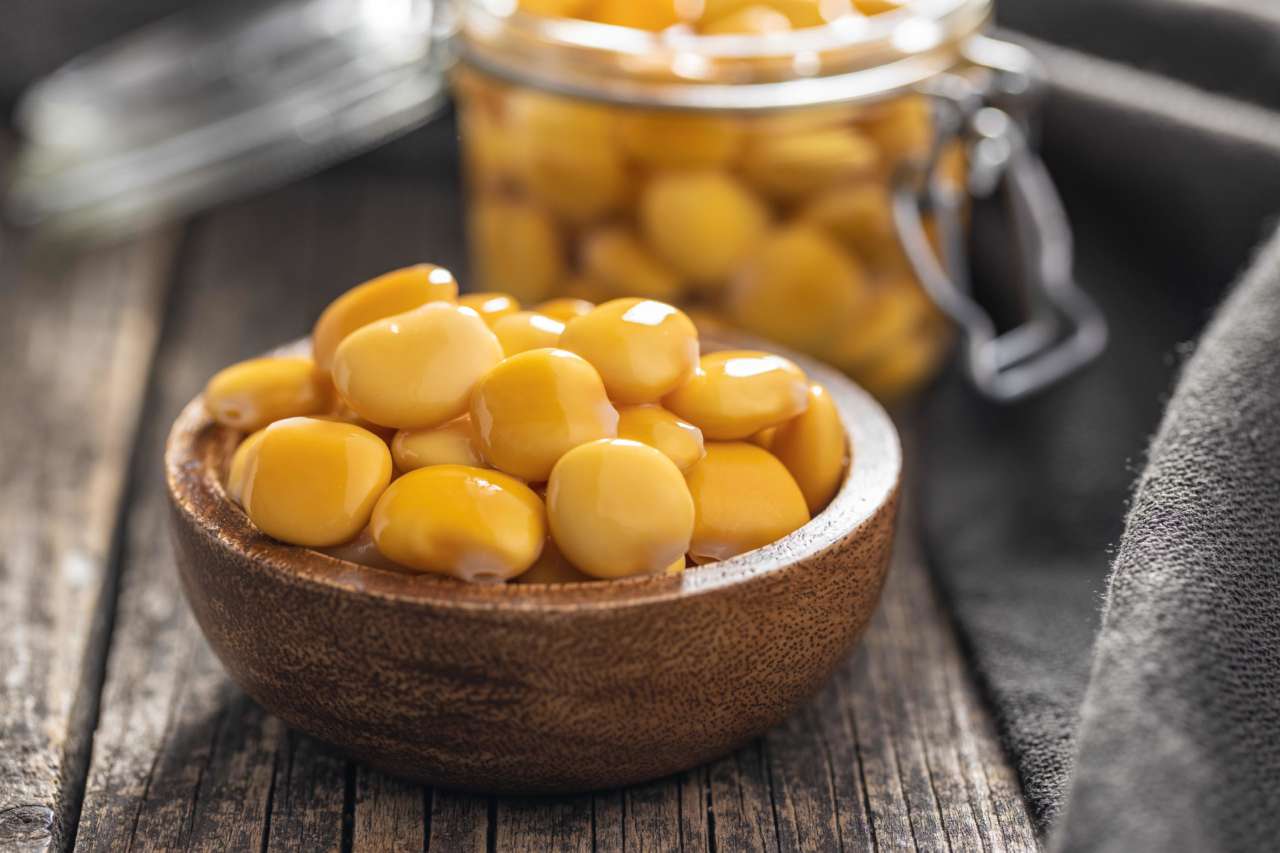
Soaked for several days to remove its bitterness, the lupin has been a Mediterranean coastal snack since Antiquity: inexpensive, rich in plant proteins, surprising to crunch.
The Ingredient
The culinary lupin - most often Lupinus albus, the white lupin - is a legume with an upright growth, with white or bluish flowers depending on the species, cultivated for millennia from the Mediterranean to the Andes (other species, notably Lupinus mutabilis, have been consumed since pre-Inca civilizations).
What strikes first is the bitterness: dried lupins are naturally rich in alkaloids - the lupanines - which must be eliminated before consumption. Since antiquity, this is done by successive soakings in salted water: the seeds swell, whiten, soften, and the bitterness disappears. It is a patient gesture - several days, with water to be renewed twice a day.
The Gesture (Homemade or Ready-Made)
Today, the easy way is the jar or packet of lupini already desalted, ready to eat: you rinse them, drain them, serve them cold as an appetizer with a little olive oil and lemon, a few olives, a fresh glass. They are crunched by gently pressing the skin between the thumb and index finger: the inner seed comes out by itself, soft and pale yellow.
To go a little further:
- As an alternative hummus: cooked lupins blended with tahini, lemon juice, garlic, and olive oil - denser than a chickpea hummus, with a marked vegetable note.
- In salad: lupins, cherry tomatoes, finely chopped red onion, fresh herbs, olive oil, and a dash of vinegar. Simple and satisfying.
- In broth: a few lupins added to a seasonal soup provide texture and a salty note.
An Ingredient That Spans the Ages
Pliny the Elder, in his Natural History (book XVIII, dedicated to agriculture), mentions lupin as a common food among Roman peasants - nourishing, inexpensive, almost a subsistence food. In southern Italy, in Naples or Sicily, it is still found today sold in markets, in its brine, as a familiar snack for votive festivals and summer evenings. There is something of the Mediterranean slowness in this small ritual - taking out the seed from its skin, crunching it, drinking - one takes their time.
Important Precaution
Lupin is among the legumes richest in vegetable proteins. However, it can cause cross allergies with peanuts: people allergic to peanuts should avoid it or consult a doctor first. Also, beware of ornamental lupins from the garden, whose seeds have not been desalted - their bitterness is not eliminated and the alkaloids remain present. As a complement to a varied diet, not as a replacement for nutritional follow-up - consult a health professional.
Article produced by artificial intelligence, reviewed under human editorial control.
The journey
Cuisine de saison — légumes du moment, gestes simples
- 1Vegetable tartares - the summer starter that's made with a knife, not a blender20/07/2026
- 2The panzanella - when stale bread becomes the essence of the Italian summer21/07/2026
- 3**Lemon, Feta and Pea Orzo Salad - The Make-Ahead Recipe That Saves Summer**21/07/2026
- 4**Apricot stuffed with almond cream - a summer dessert that relies on three ingredients**21/07/2026
- 5Broccoli, quinoa & lemon stir-fry - the one-pot meal for busy evenings22/07/2026
- 6Gazpacho yellow & colorful skewers - a sun in the glass22/07/2026
- 7Capers - the small salty burst that awakens summer23/07/2026
- 8Apricot, carrot and vanilla yogurt ice cream - no ice cream maker needed23/07/2026
- 9The lupin - the bitter seed turned into an aperitif ritual23/07/2026