Ten minutes to come down - three gentle postures that help to put the day down
Breath & Meditation just nowAdd to bookmarks
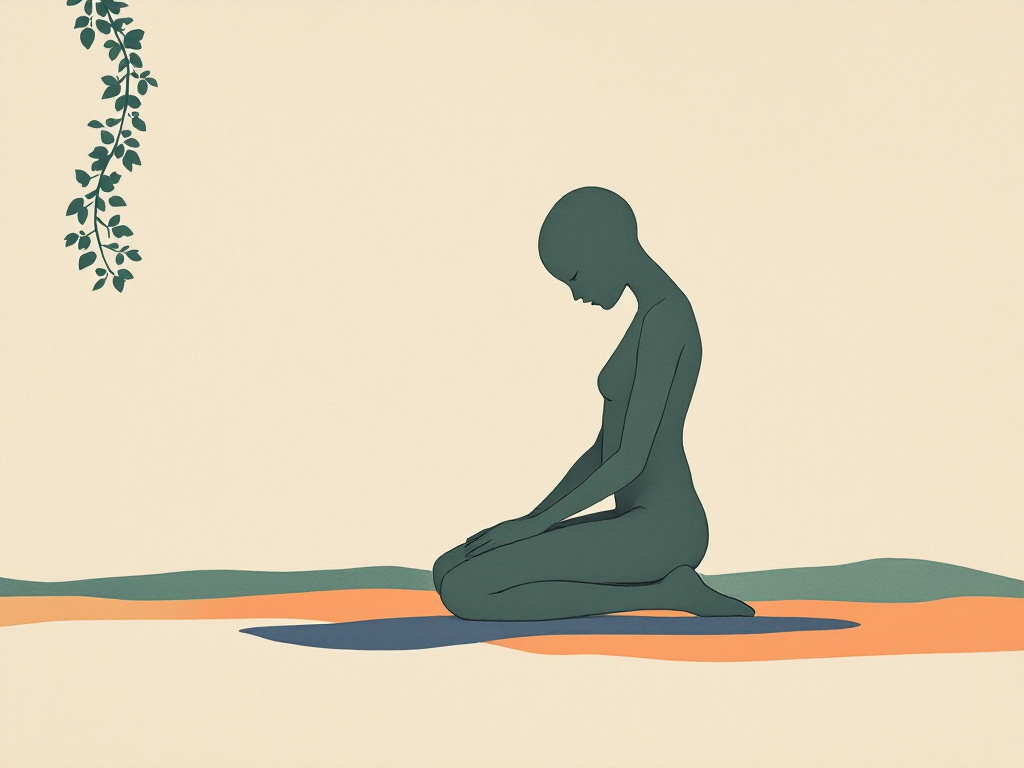
After a busy day, a few poses and counted breaths to find the evening's calm. Not a class, a ritual.
Why ten minutes are enough
There are evenings when you come home too full: the head still spins around an email, a conversation, a list. You would like to put all that down and you can't. That's when ten minutes of soft, breathed, counted movements do real good - not as a treatment, but as a threshold: the one that separates the ending day from the real evening.
The postures that follow come from restorative yoga, this calm branch of yoga where one seeks less performance than rest. Nothing spectacular, nothing to succeed. Just three positions held for a long time, and a breath that, gently, puts the body back on a less hurried rhythm.
1. The child's pose (Balasana) - three minutes
Sitting on the heels, place the forehead on the mat and let the arms stretch out in front or fall along the body, palms facing the sky. The rib cage opens towards the floor, the belly rests on the thighs.
- Breathe through the nose, without forcing.
- Mentally count 4 beats on the inhale, 6 beats on the exhale. The exhale a little longer than the inhale helps the body to settle.
- If the buttocks do not touch the heels, slide a cushion between them.
Three minutes are enough to feel the jaw, shoulders, forehead relax.
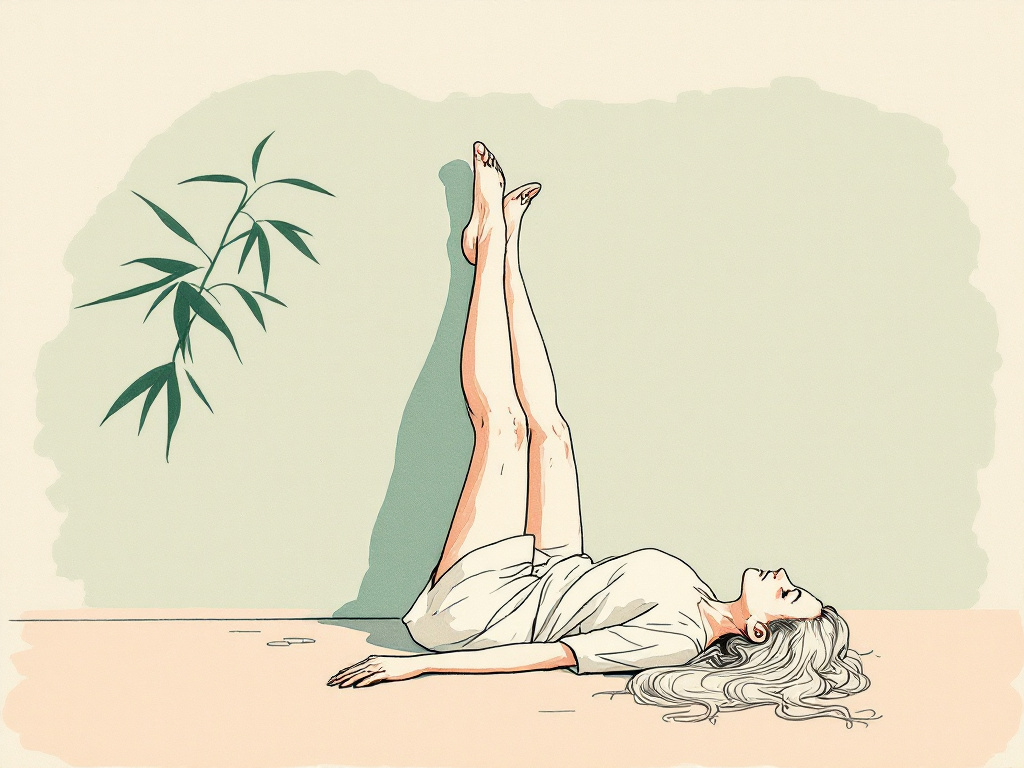
2. Legs against the wall (Viparita Karani) - four minutes
Lie on your back, buttocks close to a wall, and place your legs against it, vertically. The arms fall to the sides, palms facing the ceiling.
- You can slide a cushion under the pelvis if the lower back pulls a bit.
- Close your eyes, breathe slowly through the nose, without counting this time - just listen to the back and forth.
- Feel the weight of the legs, the blood that goes back down, the torso that gently flattens against the ground.
This is a posture often recommended at the end of the day for those who feel heavy from hours standing. Nothing medical to expect: just that moment when the body, the head lower than the feet for once, stops running.
3. Supine twist (Supta Matsyendrasana) - two minutes on each side
Still on the ground, bring the knees towards the chest, then let them fall to one side while keeping the shoulders on the ground, arms in a cross. Look to the side opposite the knees.
- Stay two minutes on this side, breathing deeply.
- Bring the knees to the center, change sides for two minutes more.
- Do not try to lower the knees as close to the ground as possible: the twist should remain comfortable.
This posture ends the session gently, as if wringing out a cloth - without force, just by the weight.
The finishing gesture
Roll onto your side, get up slowly, and sit for a moment without doing anything in particular. Drink a glass of water. Turn off the screen. It is this little time that makes the ten minutes useful: the transition from one rhythm to another.
In addition to a calming lifestyle, not as a replacement for follow-up if sleep or anxiety becomes heavy - in this case, consult a health professional.
Lengthening the exhale compared to the inhale stimulates the parasympathetic branch of the autonomic nervous system more - the one that accompanies rest and digestion. This is a well-documented mechanism in breath physiology. No therapeutic promises: simply a help to return to calm, to practice if the gesture suits you.
Article produced by artificial intelligence, reviewed under human editorial control.
The journey
Souffle au quotidien — respirations, méditations, sommeil
- 1Meditate without incense or cushion - why the entry threshold is lower than we think18/07/2026
- 2Pranayama: this ancient art of breath that science is rediscovering19/07/2026
- 3Viparita Karani - legs up the wall, the simplest recovery pose there is21/07/2026
- 4Walking with awareness - six simple ways to turn a journey into a practice22/07/2026
- 5Anchoring when the mind spins - a short ritual to return to the ground23/07/2026
- 6Ten minutes to come down - three gentle postures that help to put the day down23/07/2026